
Based on current project communication, Highland Hideaway aims to follow a township-style layout with residential towers set around landscaped zones and shared community infrastructure. The stated intent is to avoid a crowded, hard-surface-heavy format and instead create a more breathable environment with stronger integration of green pockets, walking routes, and activity zones. If delivered well, this kind of planning can improve both quality of life and long-term marketability because homes in well-composed communities often retain stronger resident satisfaction and buyer recall. Prestige Kodagurki is useful for the site-planning lens because buyers should read open space, movement, parking, and amenity placement as everyday-use details, not brochure decoration.
At this stage, buyers should view all design information as indicative until final sanctioned plans are available. The right approach is to understand the design philosophy now, then verify measurable details later: tower orientation, setbacks, amenity placement, driveway logic, parking distribution, and utility-core planning. A project can have an attractive visual plan but still underperform if execution-level planning is weak. The goal is to evaluate both promise and practical detail together.
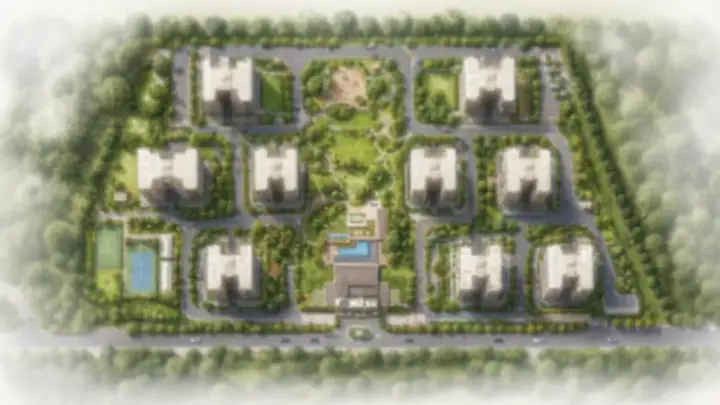
Planning Philosophy: Space as a Core Asset
One of the central themes associated with Highland Hideaway is open-space-led planning. In practical terms, this means the project narrative is not only about the number of towers or units, but about how much breathable area is retained around those buildings. Buyers should interpret this carefully. Open space is not meaningful by percentage alone; its usability is what matters. Well-planned open areas support real movement, social interaction, and visual relief. Poorly planned open areas can become decorative but functionally underused.
A strong township philosophy usually creates a hierarchy of open spaces. Primary greens might function as central gathering zones. Secondary greens can connect tower clusters and daily pathways. Smaller pockets can serve seniors, children, or quiet seating needs. This layered approach helps residents use outdoor space naturally rather than treating it as a distant amenity destination. For families and older residents, this can significantly improve daily comfort. For a site-planning comparison with Prestige Highland Hideaway, consider Prestige Eaton Park, which offers three- and four-bedroom apartments within The Prestige City on Sarjapur Road.
From a buyer perspective, it is worth checking how much open space sits at podium level versus natural ground interface, how shaded pathways are designed, and whether active areas and quiet areas are balanced. These details influence whether the project feels truly livable or merely visually impressive in renders.
Tower Placement, Orientation, and Privacy Logic
In high-rise communities, tower placement is one of the most critical planning decisions. Good placement improves daylight, airflow, and privacy while reducing direct window-to-window conflict. Weak placement can create visual crowding, poor ventilation, and persistent heat-load issues in certain stacks. Highland Hideaway’s design narrative suggests a layout that prioritizes spacing and internal view corridors, which is a positive starting point if execution follows through.
Orientation also matters beyond aesthetics. Different facings can experience different thermal behavior across seasons and times of day. Buyers should request orientation maps and stack plans before selecting a unit, especially if they have strong preferences around morning light, heat exposure, or balcony usability. In large communities, two units with similar area can deliver very different lived comfort depending on orientation and surrounding tower placement.
Privacy planning should be evaluated at both unit and cluster levels. Check inter-tower distances, balcony alignment, and the angle at which facing units interact. Good master planning should ensure that social zones remain active without compromising the personal privacy expected in premium housing formats.
Mobility Design: Vehicular and Pedestrian Flow
A good master plan separates movement types intelligently. Residents, children, senior citizens, service vehicles, visitor cars, and emergency access all need different circulation priorities. If circulation is not planned clearly, even premium projects feel stressful in daily use. Highland Hideaway’s planning intent emphasizes organized movement, which should include clearly marked internal loops, controlled entry points, and reduced conflict between pedestrian zones and vehicle-dominant routes.
For buyers, one useful checkpoint is to understand how basement access and surface circulation are arranged. Are drop-off zones convenient without creating constant choke points? Are visitor parking and resident movement paths clearly separated? Are service operations likely to interfere with amenity usage areas? These questions can reveal operational quality before possession.
Pedestrian experience is equally important. Walkability inside a township drives actual amenity usage. If paths are shaded, intuitive, and safe, residents naturally engage more with community spaces. If routes are fragmented or vehicle-dominant, people often retreat indoors and the social fabric weakens over time.
Amenity Zoning and Community Behavior
In a township-scale plan, amenities should not feel like isolated add-ons. Their placement should support daily routines. A central clubhouse can become the social anchor, but the surrounding zoning decides whether it remains accessible and practical. If the project delivers a balanced amenity network with pools, fitness zones, children’s areas, courts, and quieter landscapes distributed sensibly, the community tends to function more naturally for all age groups.
A thoughtful amenity layout also avoids over-concentration of activity near select towers. Noise-heavy spaces, event zones, and sports pockets should be located with acoustic and privacy awareness. Quiet gardens, senior seating, and contemplative spaces should remain shielded from high-movement corridors. The strongest projects usually achieve this balance, allowing different resident groups to coexist comfortably without lifestyle friction.
Buyers should ask for amenity phasing too. In large projects, some facilities may be delivered in later stages. Clarity on what becomes operational with early handover can help manage expectations and avoid dissatisfaction in the first years of occupancy.
Landscape Strategy and Microclimate Comfort
Landscape planning is not just decorative. In dense urban settings, it contributes to thermal comfort, visual softness, air quality perception, and community well-being. Tree cover, shaded edges, planted buffers, and permeable surfaces can make a substantial difference in how a project feels at ground level. Highland Hideaway’s open-space narrative points toward landscape-heavy planning, and this is a key area buyers should evaluate closely.
Microclimate comfort is often underestimated at purchase stage. A project that looks premium in elevation but lacks meaningful ground-level shade can feel harsh over time. On the other hand, projects with mature planting strategies and human-scale pathways often become more enjoyable with age. Buyers should check what percentage of landscape is usable, what irrigation strategy is planned, and whether planting is concentrated only at entry visuals or distributed across daily movement routes.
Water-sensitive landscape planning is another practical checkpoint. In Bengaluru conditions, projects that combine native planting choices, rainwater capture logic, and efficient irrigation systems generally perform better in both maintenance and resilience terms.
Infrastructure Backbone and Sustainability Systems
The invisible systems inside a master plan often determine long-term livability more than visible amenities do. This includes water management, sewage treatment, drainage, power backup architecture, waste handling, and maintenance access. Buyers should ask for clear documentation on these systems, because once occupied, these are the factors that directly affect comfort, operating cost, and resident confidence.
Highland Hideaway is expected to include sustainability-oriented systems such as rainwater harvesting, sewage treatment, and energy-conscious common-area planning. That is directionally positive, but buyers should verify design capacity and maintenance protocols. A system is only as good as its operations model. Understanding how infrastructure is run post-handover can provide realistic insight into future monthly maintenance behavior.
Stormwater planning deserves specific attention in large projects. Proper grading, drainage design, and water-path management reduce monsoon stress and protect both surface usability and basement operations. In any township-style investment, these are not technical side details; they are core quality markers.
Phasing, Execution Risk, and Delivery Discipline
Large-format developments are typically delivered in phases, and phase planning has direct impact on resident experience. A project can have an excellent final vision but still create inconvenience if early phases are occupied while major civil work continues nearby. Buyers should seek clarity on phase boundaries, expected completion windows, and which amenities are tied to each phase.
Execution discipline also influences market confidence. Transparent communication on milestones, construction sequencing, and handover dependencies usually signals stronger delivery governance. Buyers should not hesitate to request periodic update frameworks, especially in early-stage projects where timeline confidence is still being established.
A practical tip: evaluate your own risk tolerance before booking. If you prefer immediate certainty, near-completion inventory might suit you better even at higher entry pricing. If you are comfortable with phased delivery and document-backed early-stage decisions, launch-stage participation can be viable. The right choice depends on your timeline, not on generalized market noise.
Master Plan Checklist for Buyers
Before finalizing a unit at Highland Hideaway, create a focused checklist specifically for master plan quality. Confirm tower-wise orientation, inter-tower spacing, and your unit’s visual outlook. Review driveway and basement entry logic relative to your block. Understand where major amenities sit and whether your unit is close to potential noise zones. Check the location of utility infrastructure and service access so you can avoid avoidable long-term inconvenience.
Also verify open-space usability: are parks and walking routes naturally connected to residences, or are they isolated pockets? Is there balanced planning for children, seniors, and general social use? Is landscape continuity maintained across phases? These questions help convert brochure-level impressions into practical decision clarity.
Finally, review phasing commitments in writing wherever possible. If certain amenities are deferred, factor that into your expectations and valuation. A disciplined checklist-based approach reduces emotional decision risk and improves post-purchase satisfaction.
Long-Term Value of Good Master Planning
Over a 10- to 15-year horizon, communities with stronger master planning often show better resident retention, healthier maintenance culture, and stronger resale narratives. Buyers and tenants usually respond to lived quality: natural light, privacy comfort, usable greens, efficient movement, and low-friction community operations. These are all outcomes of planning quality, not just construction finish.
For Highland Hideaway, the planning story appears directionally strong. The project presents itself as a community-led layout rather than a tower-count-first product. The final outcome will depend on execution detail and operational follow-through, but the planning framework itself offers a meaningful evaluation lens for serious buyers.
If you are shortlisting this project, treat the master plan as a primary decision layer equal to budget and unit size. When planning quality aligns with your lifestyle and holding horizon, the purchase decision usually feels more stable and less speculative.
Prestige Highland Hideaway Master Plan FAQs
What is the planned layout of Prestige Highland Hideaway?
The master plan organises around ten residential towers around a central spine of landscaped green, with tower heights up to about twenty-six floors over a basement and ground level. Generous setbacks and boulevards are proposed between buildings to allow sunlight, ventilation, and privacy. The intent is visual corridors that lead the eye toward the central park and amenity zones.
What land parcel is the Prestige Highland Hideaway master plan drawn on?
Public material places the development on roughly 33 acres, though some sources mention 18 or 36 acres. The exact figure will be confirmed only in sanctioned documents and RERA filings. At any of these sizes, this is a township-scale parcel rather than a single-tower plot.
How does the Prestige Highland Hideaway master plan handle vehicles and pedestrians?
Basement levels are designed to absorb most of the parking, keeping ground-level spaces predominantly car-free and safer for children and seniors. Entry and exit points are planned with guarded gates, CCTV monitoring, and access control. Vehicular and pedestrian pathways are separated to reduce conflicts inside the site.
What sustainability features are part of the Prestige Highland Hideaway master plan?
Rainwater harvesting, sewage treatment plants, organic waste converters, energy-efficient lighting, solar-powered common areas, and smart irrigation are part of the stated sustainability strategy. Reflexology paths, meditation lawns, and herb gardens are folded into the landscape design. These utilitarian systems typically matter more than headline aesthetics for long-term liveability.
Which amenity zones anchor the Prestige Highland Hideaway master plan?
A central clubhouse with swimming pool, gym, indoor courts, and gathering halls anchors the community both physically and socially. The plan also indicates tennis and badminton courts on the western side, contemplation gardens to the east, jogging tracks through gardens, children's play zones, senior zones, and pet-friendly parks. Final placement will be locked in the sanctioned layout.
Can the Prestige Highland Hideaway master plan still change before launch?
Yes - until the RERA-approved sanctioned plan is filed, the master plan is a working layout. Tower placement, amenity scope, and phasing can be adjusted by the developer ahead of formal registration. Decisions made on the basis of the current layout should be revisited once the sanctioned plan is public.