
| Home | Size |
|---|---|
| 1 BHK | 650 sq ft |
| 2 BHK | 1,200 sq ft |
| 3 BHK | 1,950 sq ft |
At an early stage, the right way to approach unit shortlisting is to compare practical layout quality, not just built-up area claims. Buyers should assess how the living zone connects to the kitchen, how private bedrooms are from social spaces, whether balconies are usable or merely symbolic, and whether storage and utility provisions are realistic for daily life. Projects in this segment often show similar size numbers on paper, but actual habitability can differ significantly depending on circulation planning. For a home-format comparison with Prestige Highland Hideaway, consider Prestige Eaton Park, which offers three- and four-bedroom apartments within The Prestige City on Sarjapur Road. For layout judgement, Prestige Kodagurki adds a same-city product-format lens around usable space, privacy, circulation, and how the home will work day to day.
Current communication indicates approximate sizes of 650 sq ft for 1 BHK units, 1,200 sq ft for 2 BHK units, and 1,950 sq ft for 3 BHK units. These figures are indicative and should be validated against final sanctioned plans, carpet area disclosure, and detailed cost documentation. Buyers should always compare carpet efficiency, not only super built-up values, before making a financial commitment.
Configuration Snapshots
Which format suits which buyer, from the 1 BHK entry point upward.
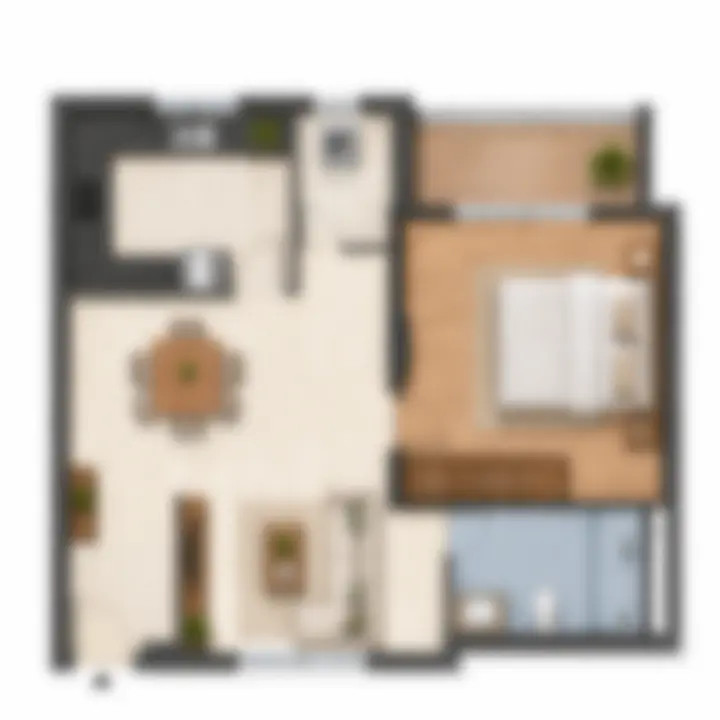
1 BHK - Approx. 650 sq ft
The 1 BHK format is generally most relevant for first-time buyers, single professionals, young couples, and investors targeting fast rental absorption. In practical planning terms, a strong 1 BHK should minimize wasted corridor area and prioritize a flexible living zone that can handle both daily use and occasional work-from-home requirements. If the layout creates a clean split between social and private zones while preserving natural light, it can deliver strong utility even at modest size.
Buyers evaluating this typology should check entry flow, kitchen usability, and bedroom privacy from the living area. The presence of a genuinely usable balcony can improve long-term comfort more than a marginal increase in nominal area. For investors, this category often offers stronger tenant velocity in employment-heavy micro-markets, though rent levels should always be benchmarked against comparable completed communities nearby.
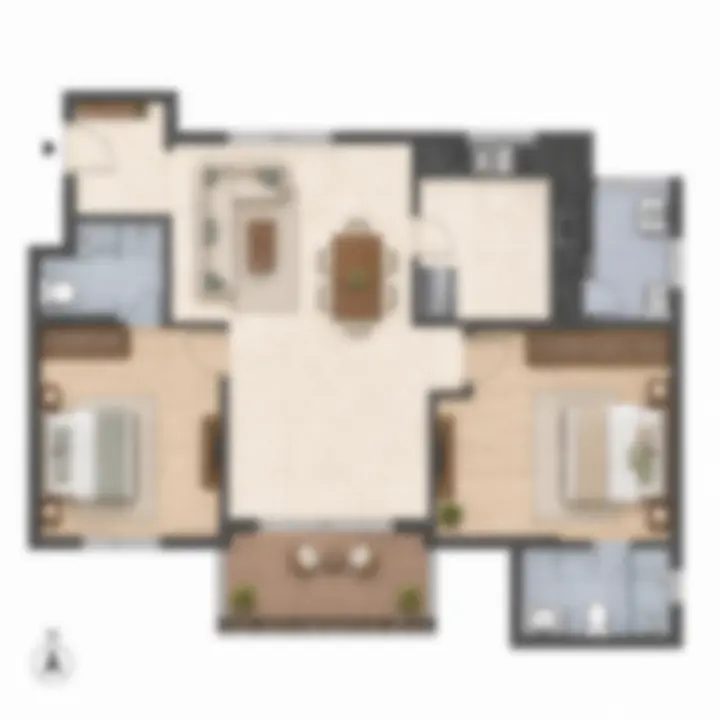
2 BHK - Approx. 1,200 sq ft
The 2 BHK segment usually becomes the core demand engine in projects like Highland Hideaway because it balances affordability with family practicality. For many households, this is the most versatile format: suitable for couples, small families, and buyers who need one additional room for children, parents, or hybrid work usage. A good 2 BHK should offer a comfortable living-dining zone, a practical kitchen with utility support, and adequate separation between bedrooms to preserve privacy.
When shortlisting 2 BHK units, buyers should evaluate whether both bedrooms are genuinely usable in proportion, whether bathroom access is convenient without compromising privacy, and whether furniture placement is practical without awkward dead corners. The best-performing 2 BHK plans usually combine efficient movement, strong daylight penetration, and enough storage flexibility to support long-term family use.
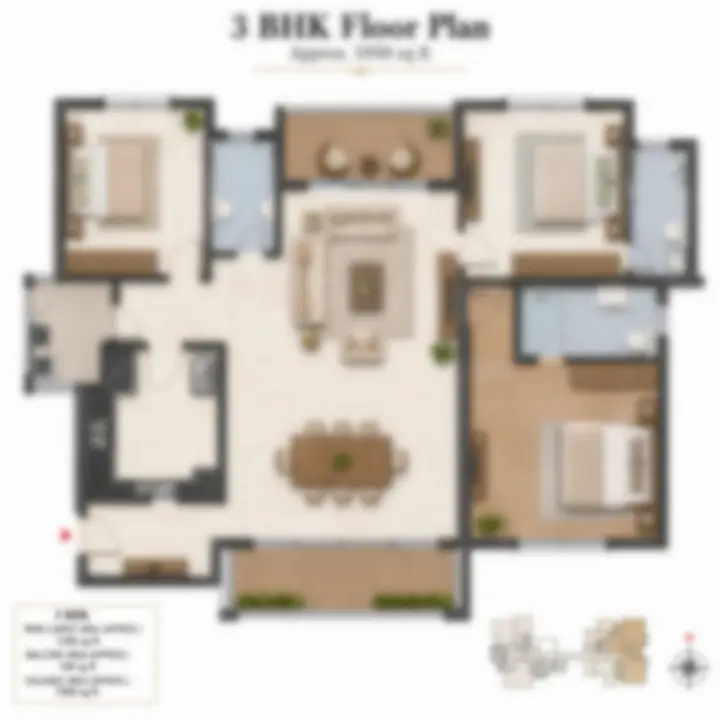
3 BHK - Approx. 1,950 sq ft
The 3 BHK typology is expected to address buyers prioritizing spacious living, larger family needs, and long-horizon end-use comfort. In this segment, layout quality becomes more nuanced. Buyers should not assume that bigger automatically means better. The most valuable 3 BHK plans are those with clear zoning between formal and private areas, adequate wardrobe and storage potential, and smooth circulation that does not consume disproportionate area in lobbies or passageways.
In practical terms, families should assess whether the plan supports daily routines without friction: bedroom-to-bathroom convenience, kitchen adjacency to dining, guest movement without disturbing private rooms, and balcony placement that actually enhances living spaces. For premium buyers, these details strongly influence long-term satisfaction and eventual resale appeal.
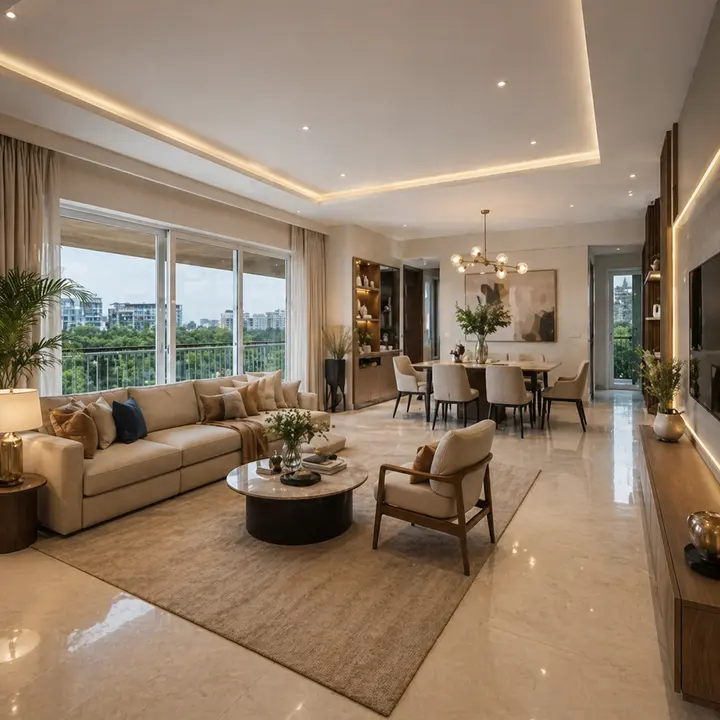
Sample Interior Style
The sample interior imagery reflects a premium-neutral style language with warm tones, large openings, and contemporary finishing themes. While visuals help communicate aspiration, buyers should separate conceptual staging from final specifications. Interior renders often represent the design direction, not exact delivered scope. The right due diligence step is to request finish schedules, material specifications, and model-flat documentation where available.
A useful approach is to evaluate interiors from a maintenance and usability lens, not just visual appeal. Ask whether flooring choices are durable for family use, whether kitchen layouts support practical appliance placement, and whether lighting provisions are adaptable for changing needs. Homes that age well usually come from thoughtful specification planning rather than decorative overstatement.
All sizes and layouts remain indicative until final sanctioned drawings and official sales documentation are issued.
How to Evaluate Floor Plan Efficiency
Efficiency in floor plans is best measured by how much of the paid area contributes to daily life. Large foyers, deep corridors, and unusable corners often reduce practical value even when total area appears attractive. Buyers should estimate usable living width, bedroom furniture fit, and kitchen workflow rather than relying only on headline square footage. In many cases, a smaller but smarter plan outperforms a larger but inefficient one.
Natural light and ventilation should also be part of efficiency assessment. Units with well-placed windows and cross-ventilation pathways tend to feel healthier and more comfortable, especially in Bengaluru’s climate context. If possible, compare stack orientation, opening positions, and balcony depth before finalizing. These factors influence thermal comfort, privacy, and long-term energy behavior.
Another useful metric is adaptability. A layout that can accommodate changing life stages, such as hybrid work, children’s study needs, or elder-friendly movement, often provides stronger long-term value. Flexibility reduces the chance that buyers outgrow a home too quickly after purchase.
Carpet Area vs Super Built-Up: What Buyers Should Confirm
One of the most common buyer mistakes is comparing units only by super built-up figures. What matters in lived reality is carpet area and the quality of that carpet distribution. Two homes with similar super built-up numbers can feel very different depending on circulation efficiency and wall thickness assumptions. Always request carpet-area disclosure and compare it across shortlisted units and competing projects.
Buyers should also ask how balcony, utility, and common-area loading are calculated. Clarity on area definitions helps avoid misunderstanding during agreement review. If the purchase is financially significant, getting an independent legal review of area-related clauses is a wise step.
For end users, area transparency is about comfort. For investors, it is about return logic. Either way, decision quality improves when area math is clear before booking rather than interpreted later.
Choosing the Right Configuration for Your Use Case
If you are buying for self-use, start with your household’s five-year needs, not today’s minimum requirement. Families often underestimate storage, work-from-home demand, and lifestyle evolution. A 2 BHK may feel sufficient today but become constrained later if both partners need dedicated work zones or if family size changes. Conversely, buying too large can strain finances and reduce flexibility for other goals. The right configuration is one that balances comfort with sustainability of ownership cost.
If you are buying for investment, focus on demand depth and tenant profile. Smaller units may lease faster, while larger units can command higher absolute rents but may have narrower tenant pools. Evaluate inventory competition in nearby delivered projects, not just launch narratives. A realistic rental estimate grounded in actual market comparables is more valuable than optimistic projections.
For mixed-intent buyers, those who may self-use initially and rent later or vice versa, choose plans with broad appeal. Units with practical room proportions, functional kitchens, and balanced privacy tend to perform better across both end-use and rental scenarios.
Interior Planning, Storage, and Livability Details
Floor plans should be reviewed with interior practicality in mind. Ask simple but important questions: can a standard bed and wardrobe fit without blocking movement? Is there enough wall continuity for storage? Does the living area support both seating and dining comfortably? Is there scope for a work desk without disrupting circulation? These questions convert a drawing into a real home assessment.
Kitchen and utility design deserves special attention. In many households, kitchen usability directly affects daily stress levels. Buyers should evaluate counter lengths, appliance fit, ventilation potential, and utility access. Even premium projects can underperform in this area if planning is style-led rather than workflow-led.
Bathrooms should also be assessed for layout usability and maintenance ease. A visually attractive but tight bathroom can become inconvenient over time. Practical sizing, fixture placement, and cleaning-friendly design often matter more in long-term ownership than initial visual impact.
Floor Plan Red Flags to Avoid
While shortlisting, watch for recurring red flags: excessive passage area, awkward bedroom geometry, narrow kitchen widths, and balconies that are too shallow for actual use. Also check whether main doors open directly into private spaces, whether toilet doors face social zones uncomfortably, and whether window placement supports privacy from adjacent towers.
Another red flag is overdependence on premium upgrades to make the plan functional. If a unit needs major modification ideas to work for normal family life, it may not be a strong base plan. Buyers should prioritize fundamentally sound layouts that work with standard furnishing and minimal intervention.
Finally, avoid rushing based on inventory pressure without seeing full plan documentation. Early-stage decisions are fine when document clarity is strong. They become risky when buyers commit on partial information.
Buyer Checklist Before Final Unit Selection
Before selecting a final unit, compare at least three options within your preferred configuration. Check orientation, tower position, floor level impact, daylight quality, and noise exposure relative to amenities and circulation roads. Request stack plans and mark likely view obstructions, privacy conditions, and functional pros and cons for each option.
Next, map financial implications: base price, floor rise, preferred-facing charges, parking, clubhouse, maintenance deposits, and statutory components. A slightly higher base unit can still be better value if it offers superior livability and lower compromise. Decision quality improves when layout and full-cost analysis are done together.
Document every assumption before booking: area definitions, finish scope, possession timeline, and key inclusions. This reduces post-booking disputes and helps buyers stay in control of both expectations and outcomes.
Final Perspective on Floor Plans at Highland Hideaway
Highland Hideaway’s expected mix of 1 BHK, 2 BHK, and 3 BHK homes gives buyers multiple pathways depending on budget, lifestyle, and investment intent. The opportunity is strongest when buyers move beyond headline sizes and evaluate actual functional quality. In this project category, long-term satisfaction is usually driven by planning fundamentals: room proportions, movement clarity, daylight quality, storage potential, and adaptability.
If these fundamentals align with your needs and the final documentation confirms expected specifications, the floor-plan proposition can support both quality end-use living and stable long-hold value. The smartest decisions will come from structured comparison, document-backed verification, and a clear understanding of your own priorities.
Prestige Highland Hideaway Floor Plans FAQs
What floor plans are planned at Prestige Highland Hideaway?
Three primary unit types are indicated: 1 BHK around 650 sq ft, 2 BHK around 1,200 sq ft, and 3 BHK around 1,950 sq ft. Each typology is designed to maximise space efficiency and natural light while keeping living and sleeping zones separated. Final carpet, balcony, and super built-up areas will be defined in sanctioned drawings.
Who is the 1 BHK at Prestige Highland Hideaway designed for?
The 650 sq ft 1 BHK is aimed at young professionals, newly-married couples, and investors looking for an easy-to-rent product. The layout pairs an open living-dining space with a compact kitchen, with the bedroom tucked away for privacy. A single reserved parking space is typically included; the indicative starting price is around Rs. 70 Lakhs exclusive of statutory charges.
What does the 2 BHK at Prestige Highland Hideaway offer?
The 1,200 sq ft 2 BHK is built for nuclear families and couples planning to expand, with a foyer opening into a generous living-dining zone that spills onto a balcony. Bedrooms sit on opposite sides for privacy, most layouts include two bathrooms, and some units add a utility or storeroom off the kitchen. Indicative pricing starts around Rs. 1.25 Crores.
What is unique about the 3 BHK at Prestige Highland Hideaway?
The 1,950 sq ft 3 BHK is the premium end of the offering, with a separate foyer, formal living area, dining adjacent to the kitchen, and three sized bedrooms. Some layouts include a study or family lounge, and at least one bathroom is en-suite. Balconies wrap around the living spaces and indicative pricing begins around Rs. 2.5 Crores.
What finishes are expected inside Prestige Highland Hideaway apartments?
The expected palette is vitrified or imported marble in living spaces, laminated wooden floors in bedrooms, premium sanitary fittings, and modular kitchens with granite counters. Ceiling heights are generous and large sliding windows bring in daylight. Final specifications should always be confirmed against the official specification document attached to the sale agreement.
When will the official Prestige Highland Hideaway floor plan pack be released?
The official stack drawings, orientation details, and carpet vs super built-up breakdown will be shared alongside the brochure once RERA registration and approvals are filed. Until then, the bands on this page are directional and should not be treated as committed inventory. Always compare carpet efficiency across towers and stacks rather than headline square footage.