
How to Read the Gallery Like a Buyer
Most project galleries are curated to communicate aspiration quickly. That is useful, but practical buyers should decode visuals in a structured way. Start by separating images into categories: architecture and massing, arrival and common spaces, amenity and lifestyle scenes, interiors, and location context. Then ask a simple question for each category: what is likely to be delivered exactly as shown, what is representative styling, and what is still subject to phased execution or design refinement. For another visual project reference alongside Prestige Highland Hideaway, consider Prestige Eaton Park, which offers three- and four-bedroom apartments within The Prestige City on Sarjapur Road. In the same Bengaluru market, Prestige Kodagurki helps keep the gallery review tied to design evidence rather than only the most polished render or model-flat image.
For example, elevation and master-plan visuals usually reflect broad intent accurately, but facade material tones, planting maturity, and lighting effects can vary from render to handover stage. Interior lifestyle images often include premium staging that may not be part of base specifications. Pool and clubhouse visuals can communicate quality direction, but operational details such as access rules, maintenance standards, and usage timing shape actual resident experience more than render quality.
A practical gallery review also compares consistency across pages. If the tower style in elevation visuals, master plan context, and amenity backgrounds aligns, that usually indicates coherent design language. If visual narratives feel disconnected, buyers should seek clarity through official brochures and sanctioned layouts before making assumptions.
What the Tower and Arrival Visuals Indicate
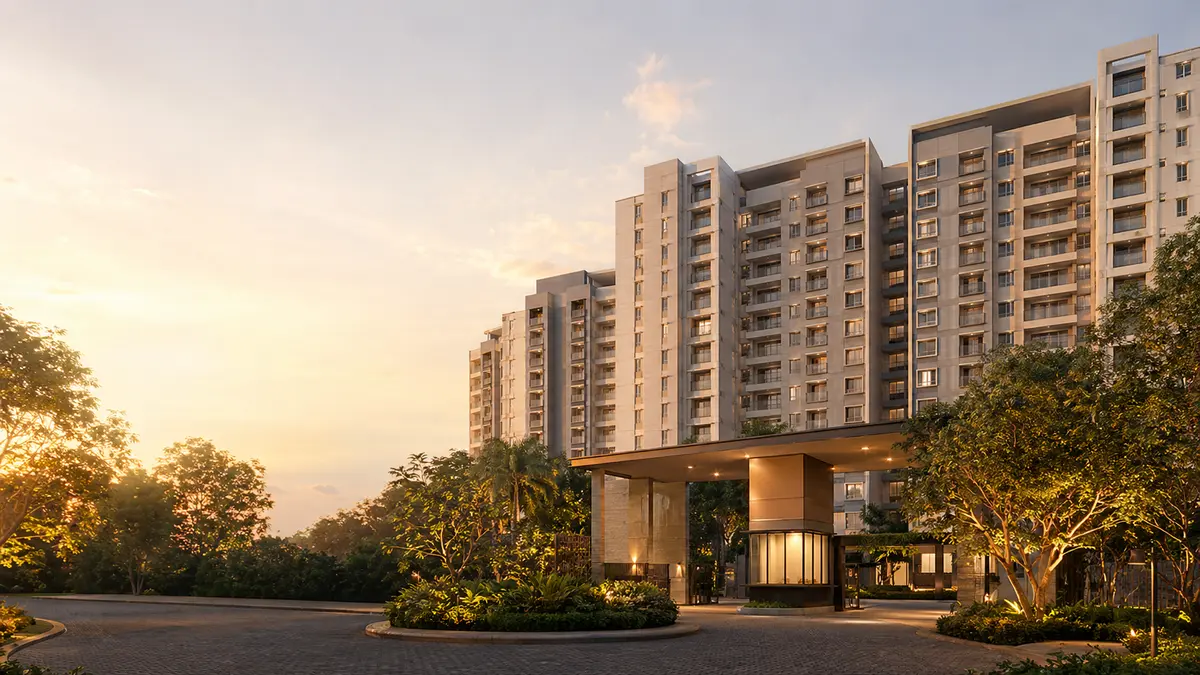
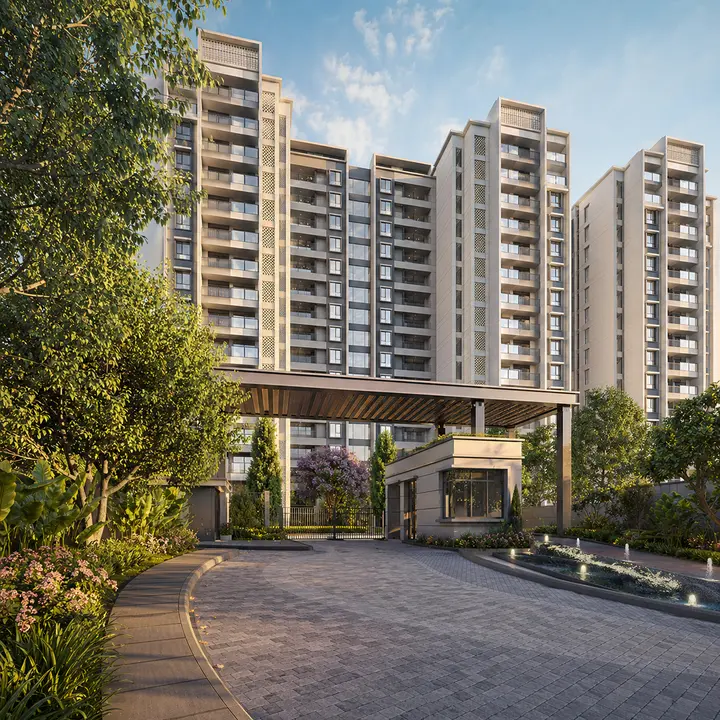
The cover and entry visuals suggest a premium, contemporary architectural language with landscaped transition zones and a formalized approach sequence. From an urban-living perspective, this matters because the arrival experience sets the tone for security flow, visitor movement, and first impression quality over many years. In well-planned projects, entry design is not only visual; it also supports practical traffic management and day-to-day ease of access.
Buyers should still validate movement logic on plan: location of drop-off points, visitor parking handling, service-vehicle routing, and how pedestrian movement is protected from congestion areas. A polished entry image is a positive sign, but functional routing determines whether the same experience remains smooth after occupancy ramps up.
Another useful check is scale proportion. Look at tower-to-entry relationship in visuals and compare with master-plan references. If the project aims for township character, the built form should feel distributed rather than compressed around one edge. Visual consistency here often signals stronger planning quality.
Interiors and Lifestyle Imagery: What to Validate
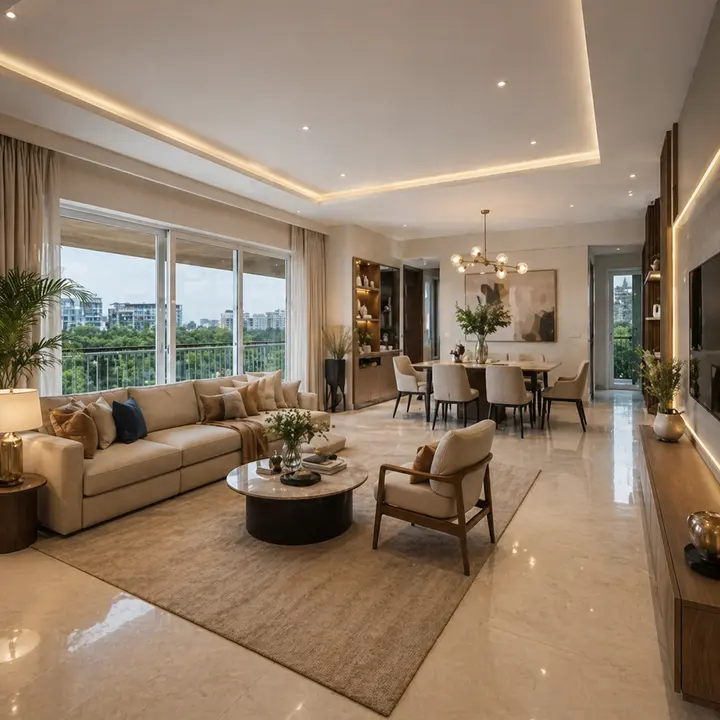
The living room visual communicates a warm, neutral, premium interior direction with larger openings and clean contemporary styling. This is helpful for buyers trying to assess brand positioning, but interior renders should always be cross-checked against specification sheets. Confirm what is included in standard delivery versus what is shown for presentation quality: flooring category, kitchen provisions, bathroom fixtures, false ceiling scope, and window systems.
A smart buyer reads interior visuals for planning cues rather than decorative cues. Observe room proportion, furniture placement feasibility, daylight potential, and circulation comfort. If a room appears attractive only because of minimal furniture in rendering, actual usability may be tighter than expected. If the visual consistently shows practical layouts, it can be a stronger signal of thoughtful design intent.
For end users, the key question is long-term functionality. For investors, it is marketability. In both cases, practical interior planning has more value than stylistic excess.
Amenity and Open-Space Visuals in Context
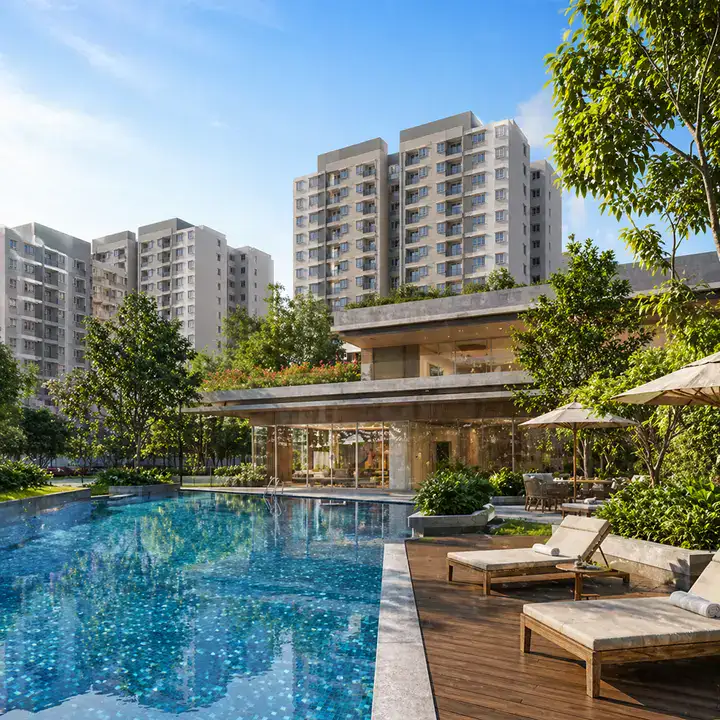
The pool and amenity imagery supports the project’s broader lifestyle narrative: recreation, social interaction, and resort-like common spaces within a township environment. Buyers should interpret these visuals alongside the amenity page and master-plan map to verify placement and accessibility. An attractive pool visual is useful, but practical value depends on whether residents can reach and use it conveniently from all tower clusters.
Open-space perception in renders is usually presented with mature landscaping. In reality, planting depth evolves over time after handover. This is normal across large projects. Buyers should set expectations accordingly and evaluate both immediate usability and long-term potential. If hardscape, pathways, and shade logic are well planned, spaces can remain usable even before full landscape maturity is reached.
Also check whether amenity visuals suggest a balanced community model: spaces for active users, children, families, and quieter use by seniors. Balanced programming often predicts better long-term resident satisfaction than amenity sets that focus only on high-visibility recreational elements.
Master Plan and Location Visuals: Decision Value
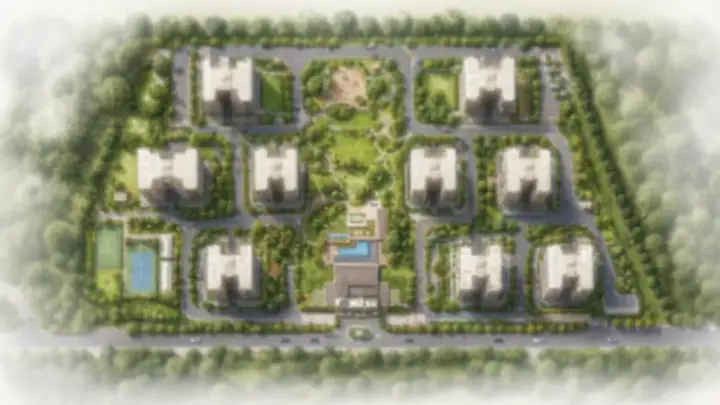
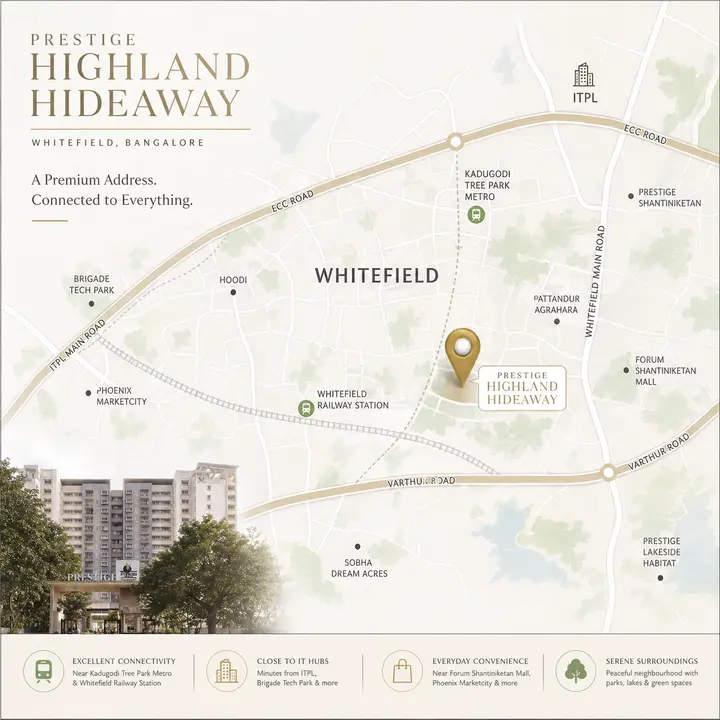
The master-plan and location-map images are among the highest-value decision assets in this gallery. They help buyers understand how the project sits in relation to external roads, metro access, and social infrastructure. They also help evaluate internal relationships: tower grouping, central greens, amenity zones, and likely movement corridors.
When reviewing the location map, buyers should map their own routine destinations: office corridors, schools, healthcare, and weekend routes. A location that looks central on a static map may still behave differently during peak travel windows. Use the gallery map as a planning aid, then validate commute realism through timed visits and route checks.
For long-term buyers, the combined reading of master plan plus location context is often more useful than any single glamour visual. It connects project promise to lived feasibility.
Gallery Review Checklist Before Site Visit
Before you schedule a visit, use this quick checklist while reviewing gallery images. First, identify which visuals influence your decision most: tower form, interiors, amenities, or location context. Second, mark which points require document confirmation: area definitions, amenity phase delivery, and specification scope. Third, prepare site-visit questions based on visuals, such as entry flow, unit orientation options, and amenity access from your preferred tower.
Fourth, compare visual promise with budget reality. If the gallery suggests a premium lifestyle experience, ensure the all-in cost still aligns with your financial comfort. Fifth, validate assumptions with written material, not only conversation. The strongest purchase decisions happen when visual understanding and document clarity move together.
Used correctly, this gallery should shorten your decision cycle by helping you ask better questions, not by replacing due diligence.
Prestige Highland Hideaway Gallery FAQs
What does the Prestige Highland Hideaway gallery show?
The gallery captures the planned community as a visual reference: tower exteriors and silhouettes, the central clubhouse and resort-style pool, landscaped gardens with jogging paths, and sample apartment interiors. Floor plan thumbnails for 1, 2, and 3 BHK units are also part of the visual pack. The hero cover image is the primary social-share visual.
Are the Prestige Highland Hideaway gallery images final renders?
No. The visuals are illustrative impressions and conceptual renderings of the project's vision rather than final delivery artefacts. Elevations, façade panels, finishes, and interior detail will be locked through the brochure and a sample home walkthrough closer to launch. Treat current renders as direction, not specification.
Can I visit the Prestige Highland Hideaway site to see it in person?
Yes - site visits can be scheduled via the contact form, with the exact pin, approach road, and current ground status shared at booking time. Visiting at different times of day is useful because sunlight patterns, breeze channels, and landscaping behaviour vary across the day. Weekday peak hours are worth covering if your commute matters.
Will there be a sample home or experience centre at Prestige Highland Hideaway?
A sample home or experience centre is typically opened around the formal launch in projects of this scale. Until then, the gallery renders and walkthrough visuals are the available reference. Confirm sample home availability with the sales team during your site visit appointment.
Where can I see the Prestige Highland Hideaway layout drawings online?
Indicative floor plan thumbnails for 1, 2, and 3 BHK units appear on the gallery page and the dedicated floor plans page. A conceptual master plan illustration showing the arrangement of towers, central green spine, and amenity zones is included as well. The official sanctioned plan pack will arrive with the brochure once RERA filings go through.
Why do some Prestige Highland Hideaway visuals look conceptual rather than photographic?
Because the project is pre-launch, the design package is still being locked, so renders are conceptual impressions of the planning intent. Final architectural shots, façade photography, and interior images get added as construction milestones are reached. We mark content as illustrative rather than passing it off as final delivery.